AI and Machine Learning Roadmap: 30 Sessions from Zero to AI Agents
The full learning map: Python and linear regression, neural networks, transformers, RAG and agents. Every session has runnable code and quick checks.
Expert guides on MDCAT, ETEA, FSC, NUST/GIKI/PIEAS, AI for students, and the best ways to study and score high
4 new articles every weekNo articles match your search. Try a different keyword or category.
The full learning map: Python and linear regression, neural networks, transformers, RAG and agents. Every session has runnable code and quick checks.
Python and Jupyter setup, a real dataset, cleaning, the train/test split and the training loop in one picture.
How the four terms nest inside each other, then your first real model: a straight line, with the maths and the code.
Why models memorise, and how a penalty on big weights fixes it. Ridge, Lasso and ElasticNet with real output and plots.
How to judge a model honestly. Regression errors, the confusion matrix, and why accuracy alone can lie to you.
The dials you set before training, how epochs and learning rate change the result, and how to tune without cheating.
A number for "how wrong am I", and the bend that lets a network learn curves. With plots and code you can run.
The algorithm that trains every neural network. The update rule, the three variants and the optimisers built on top.
Why very deep networks stall, how to spot it, and how to steady the final steps of training.
Finding groups when nobody gave you labels, then the building blocks of an artificial neural network.
Open the box. Every number of a tiny network, computed by hand and checked, then a NumPy network that learns XOR.
The most readable model in machine learning. How a tree picks its questions, and why a single deep tree memorises.
Why hundreds of unreliable trees voting together beat one careful tree, shown with real numbers.
Trees that learn from each other's mistakes. Gradient boosting built from scratch, XGBoost with early stopping, and the vocabulary of RL.
The model that looks for the widest street between two classes, and the trick that lets it bend.
Combine models for stability and accuracy, with the maths of why it works, an honest benchmark and when it is not worth it.
How a network learns to see. Filters, feature maps and pooling, then a small CNN that reads handwritten digits.
A CNN that tells you what is where, in a single fast pass. Run a pre-trained YOLO model and learn how its boxes are scored.
Networks with memory for text and time series. How the hidden state works, and the experiments that show where it breaks.
The recurrent cell with a protected memory line. Every gate computed by hand, with honest tests of what it does and does not fix.
The architecture behind every modern AI chatbot, built up from tokens to attention, with GPT-2 running real code.
How a Transformer becomes an LLM, what the memory maths looks like, how quantization and LoRA work, and the shape of an API call.
Give an LLM your own documents without retraining it. A complete pipeline you can run, with honest results for dense, keyword and hybrid search.
A real 1.5-billion-parameter model running on a laptop with no GPU. What the file is, how fast it goes, and why threads do not always help.
How a model that only produces text can check the weather or query a database. A real round trip, and the ways it goes wrong.
One open standard for plugging tools and data into any AI app. A working server, a client, and the raw messages between them.
The plumbing frameworks for LLM apps. Run a real chain and a real index on a local model, and learn when each framework earns its place.
Workflows with loops, memory and crash recovery. Run a graph that retries, survives a crash, pauses for approval, and see what tracing records.
An LLM with hands, memory and a to-do list. Build the agent loop in plain Python and measure how reliable a small one really is.
How agents reason out loud, remember across sessions with simple files, and hand structured work to each other.
Agents that check their own work against real tests, plan before acting, and the last resort of training your own model, with working code.
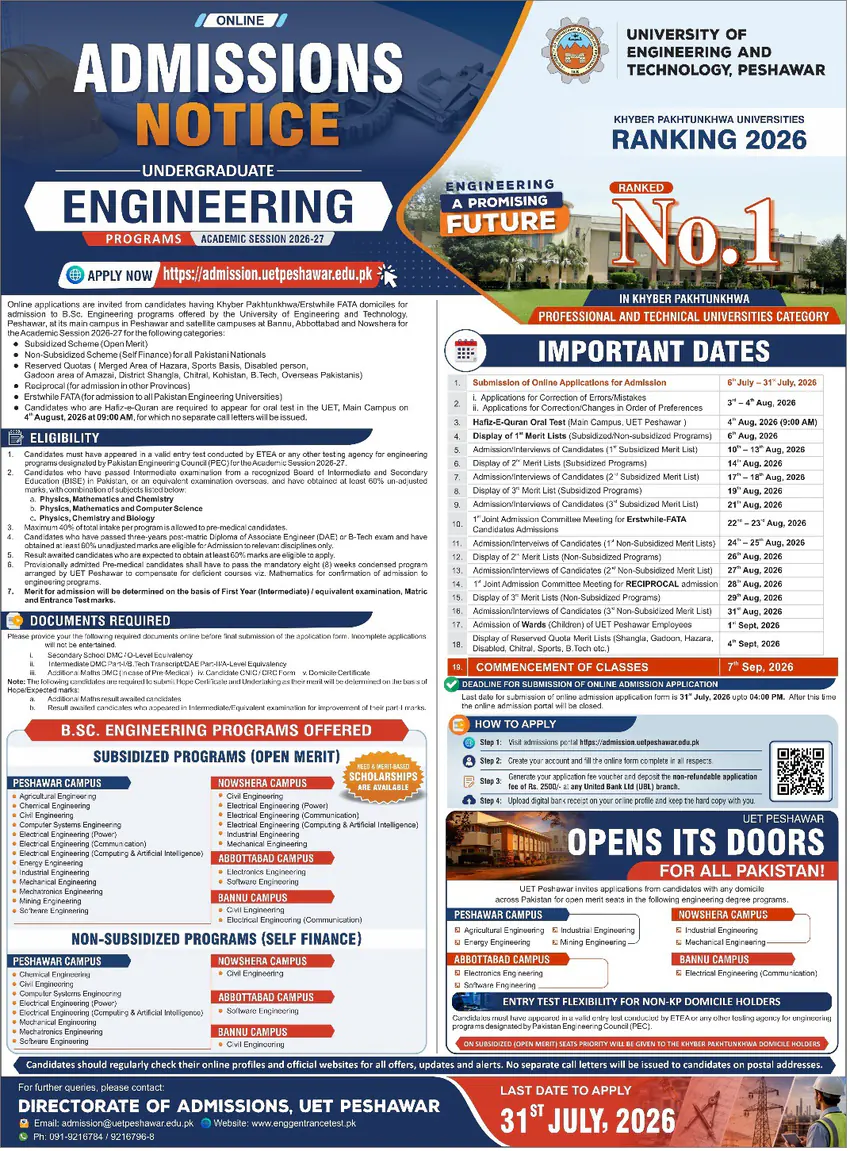
Official 2026-27 notice — all programs by campus (Peshawar, Nowshera, Abbottabad, Bannu), eligibility, ETEA CBT, the 70% FSc + 30% ETEA merit formula, full date schedule & how to apply. Apply by 31 July 2026.
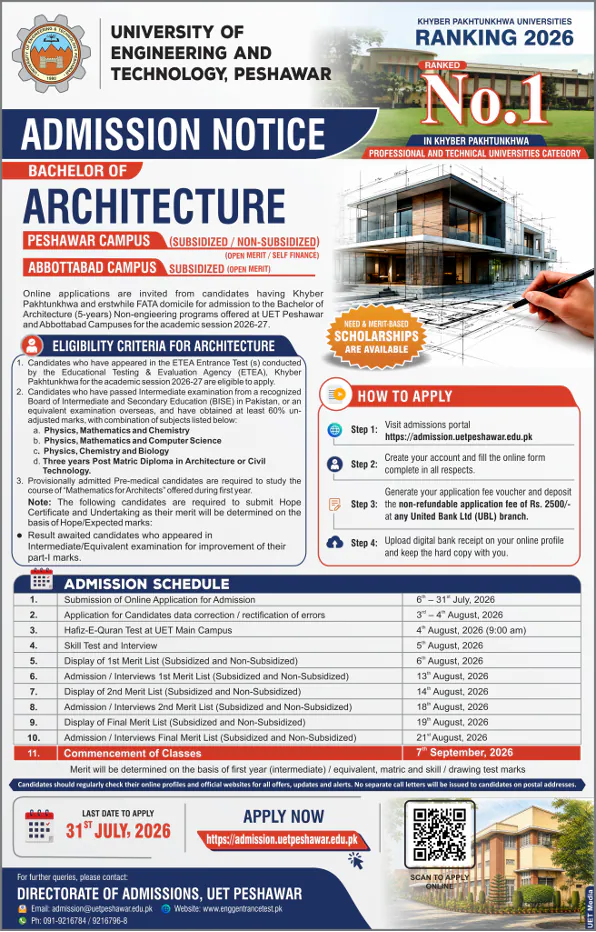
5-year PCATP-accredited degree at Peshawar & Abbottabad — ETEA CBT (+ possible aptitude test), eligibility, dates & how to apply. Apply 6–31 July 2026.
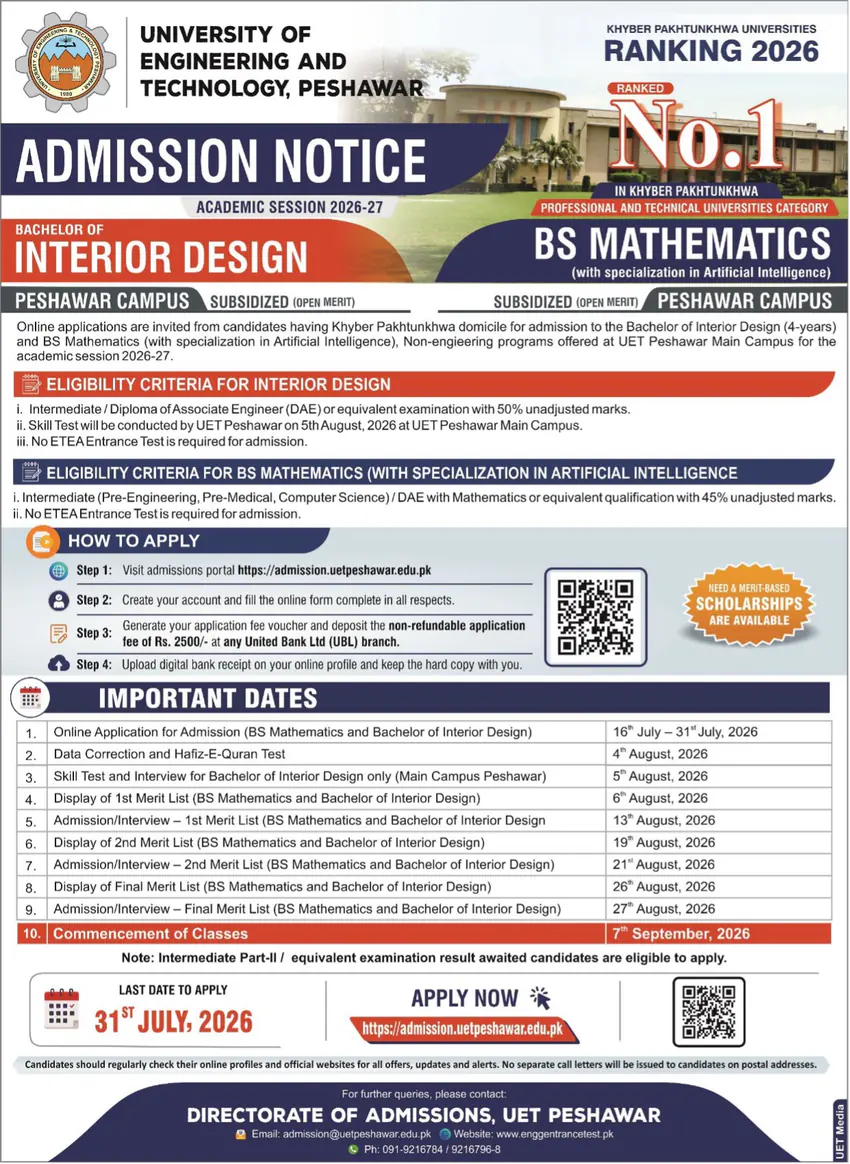
4-year non-engineering program — no ETEA test. Selection by Skill Test (5 Aug) + Inter marks. Eligibility, dates & how to apply. Apply 16–31 July 2026.
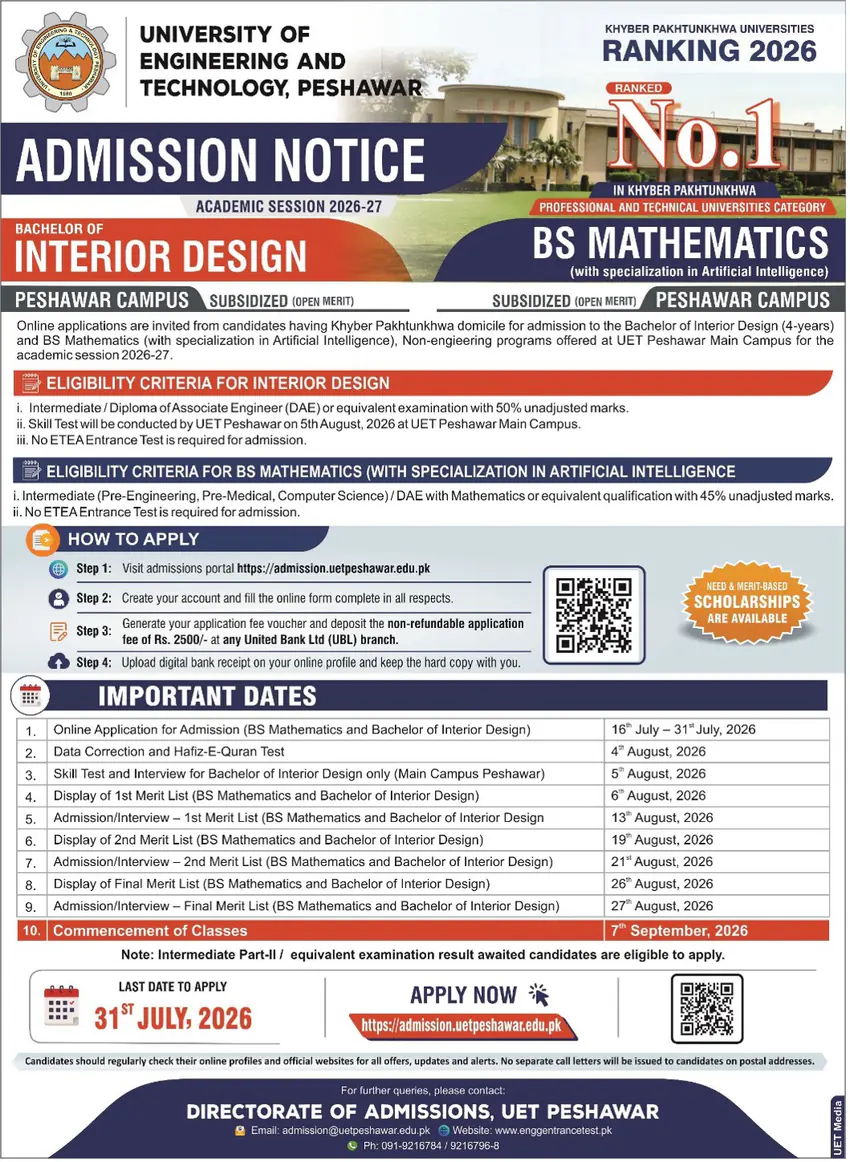
Maths + Artificial Intelligence at Peshawar Main Campus — no ETEA test, admission on Inter marks (45%). Eligibility, dates & how to apply. Apply 16–31 July 2026.
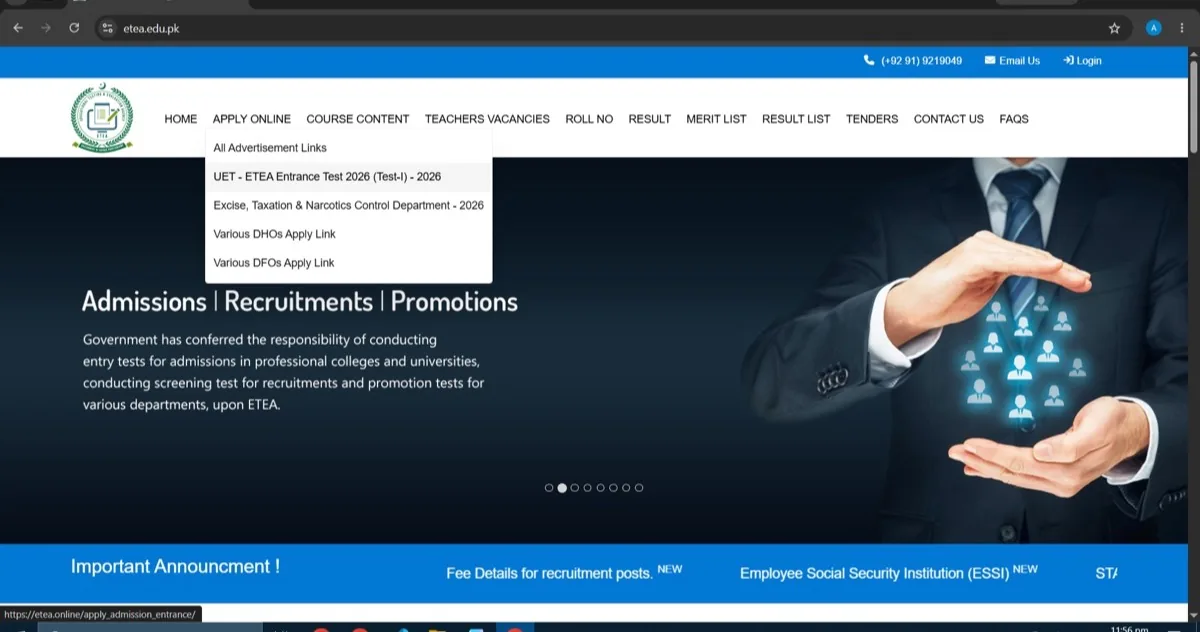
Every screen of the UET-ETEA online application — sign-up, all 6 domicile zones, education entry, photo upload via the ETEA app, fee payment & roll number slip. 27 real screenshots.
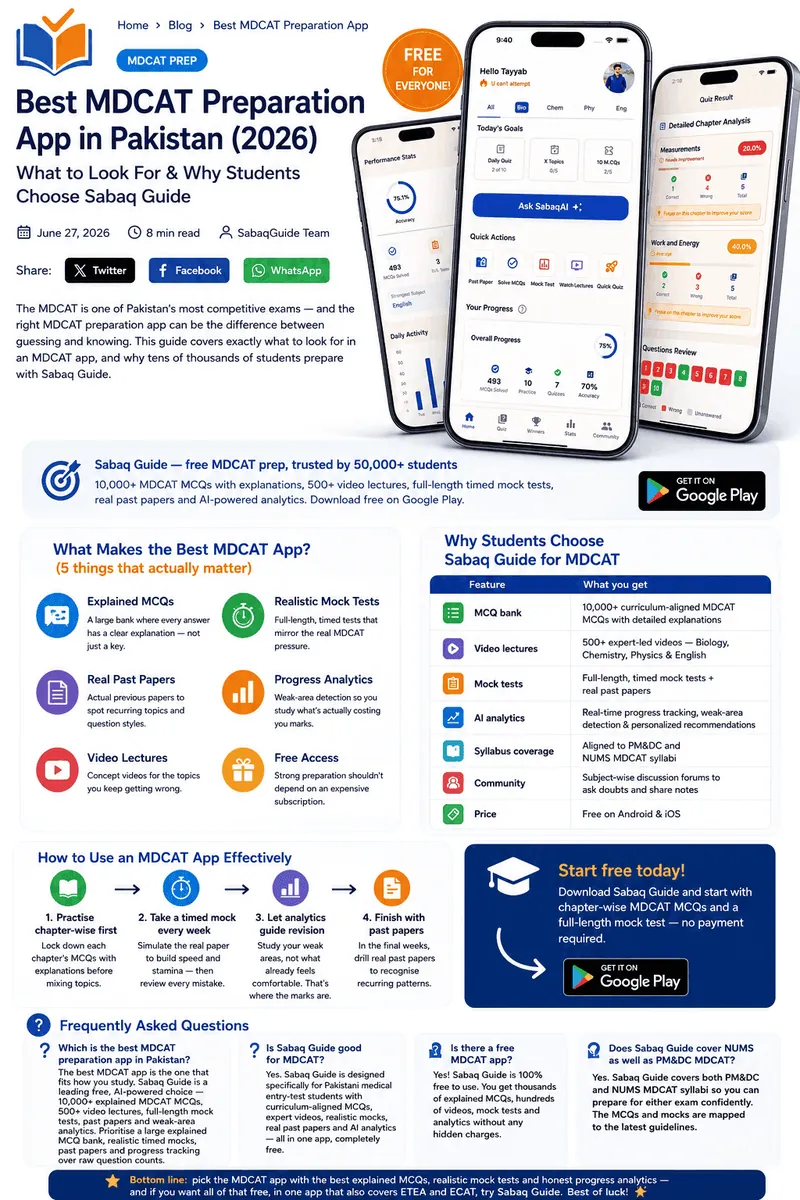
What actually makes a great MDCAT app — explained MCQs, realistic mock tests, past papers & analytics — and why 50,000+ students prepare free with Sabaq Guide.
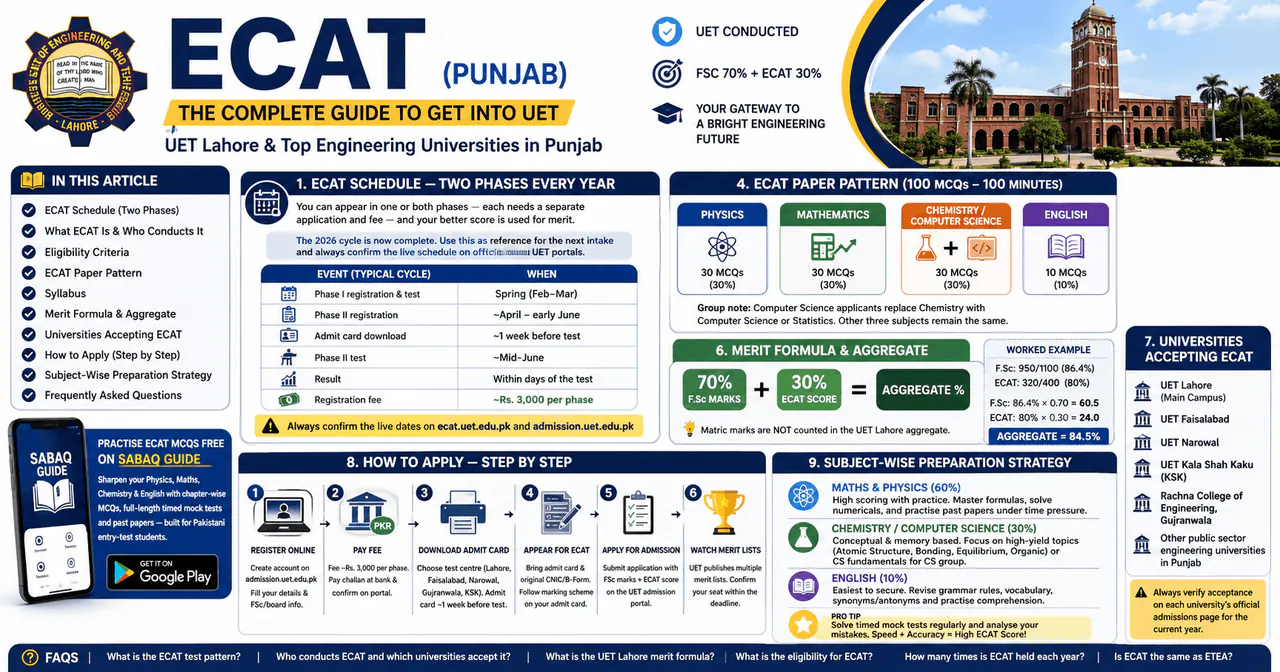
100 MCQs (Physics, Maths, Chemistry/CS, English), full syllabus, the FSc 70% + ECAT 30% merit formula, two-phase schedule, accepting universities & a complete prep strategy.

Eligibility tiers, merit formulas, fee structure, reserved quotas, Morning vs Replica, and scholarships (HEC, PEEF, Honhaar) — with a step-by-step online application.
A full roadmap for MDCAT success — from syllabus breakdown and the best books to month-by-month schedules, mock test strategies, and the biggest mistakes that cost students marks. Everything in one guide.

Missed Round 1? PIEAS extended the BS Test-II window — apply by June 25 (regular) / June 30 (late fee). Second Written Test July 12, 2026. Programs, key dates, test centers, scholarships & a step-by-step guide.

MS Artificial Intelligence is open — apply by July 3, 2026. All faculties & programs, eligibility (+ SAT track), GIKI entry test & syllabus, merit & closing trends, fees, scholarships & a step-by-step application guide.

Apply by 6 July 2026 — NO entry test. CS, AI, Cyber Security, Data Science, IoT, Robotics & Game Dev across UET campuses. Eligibility, the 40/60 merit formula, fee & a step-by-step guide.
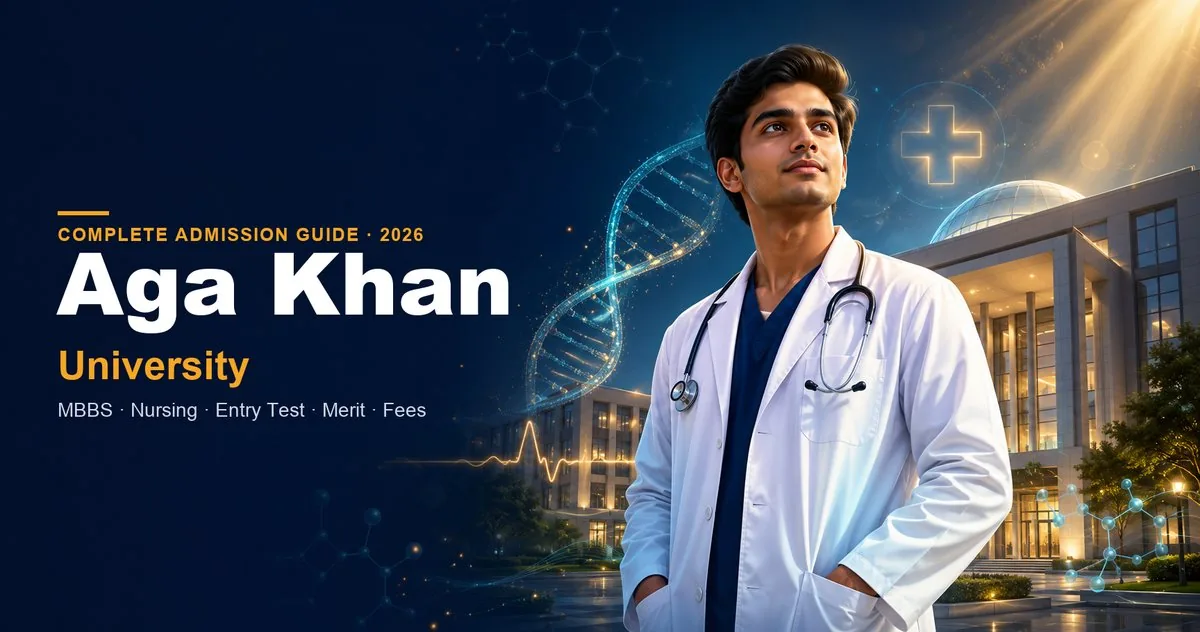
Verified against AKU's official brochure — MBBS & Nursing eligibility, the AKU entry test (science + reasoning), MDCAT, merit, fees, world-class financial aid and the MMI interview.
Active recall, spaced repetition, past-paper strategy, and time management — the science-backed techniques that FSC toppers use to score 90%+ without studying 16 hours a day.
Why your timetable keeps failing — and the science-backed system (Pomodoro, time blocking, 80/20 rule) that Pakistani FSC and MDCAT students use to reclaim 3+ hours every day.
Active recall, spaced repetition, interleaving, and deep work — the proven techniques that beat the forgetting curve and turn your study hours into top scores.
180 MCQs, paper-based, 3 hours. Biology now 45%. Full topic list for all 13 Biology units, 19 Chemistry units, and 13 Physics units — plus side-by-side comparison of PMC, PM&DC 2024, and new 2026 structure.
Two ETEA attempts allowed per PEC policy. 100 MCQs, no negative marking. Physics 40, Maths 35. Step-by-step application, all 4 campuses, merit formula, and subject-wise prep strategy.

100 MCQs, no negative marking. Physics 40, Maths 35, English 15, Chemistry 10. Full syllabus, real UET merit lists, registration steps, and month-by-month prep plan for KPK engineering universities.
Closing aggregates for public and private MBBS/BDS colleges in Punjab, KPK, Sindh, Balochistan & AJK. Official merit formula, district quota systems, and 2026 predictions.
Practice FSC Physics Part 1 with 400+ MCQs across all 10 chapters — Measurements, Vectors, Motion, Energy, Waves, Optics & more. Each question has a hint and full explanation.
What is AI, how it works, and how to get started — with a full roadmap to Computer Vision (YOLO), LLMs (Claude, ChatGPT), and Agentic AI. 14 free verified resources included.
Full syllabus chapter by chapter (Biology, Chemistry, Physics, English), MCQ breakdown, merit formula, all participating institutes, and step-by-step admission for both civilian and Armed Forces pathways.
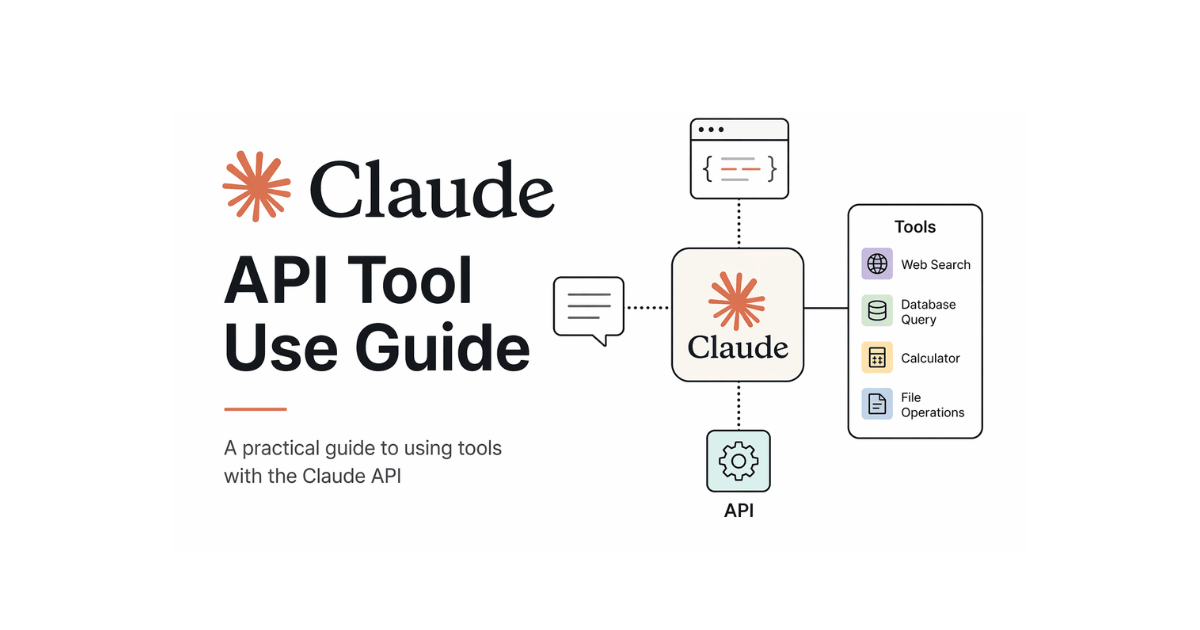
Master function calling, agentic loops, and multi-agent systems with the Claude API. Real Python code for health and education apps — from first tool call to production orchestrators.

Learn object detection, classification, and segmentation from scratch using Ultralytics YOLO11. Full environment setup, dataset preparation, training, and real verified output included.
Paper pattern, subject breakdown, how NET is scored, and the preparation strategy that gets students into NUST. From someone who scored in the top 3%.